
You decided you want to stop. Not tomorrow, not next week—today. Right now.
That decision is the hardest part, and you just made it. What follows is a straightforward, step-by-step plan designed to carry you through the next 24 hours without watching porn. Not a 90-day reboot. Not a complicated framework. Just the practical moves that work right now.
Step 1: Change Your Environment Immediately
Your environment is stronger than your willpower. If your phone is in your hand and you’re in a private space, the battle is already tilted against you.
Right now, do this:
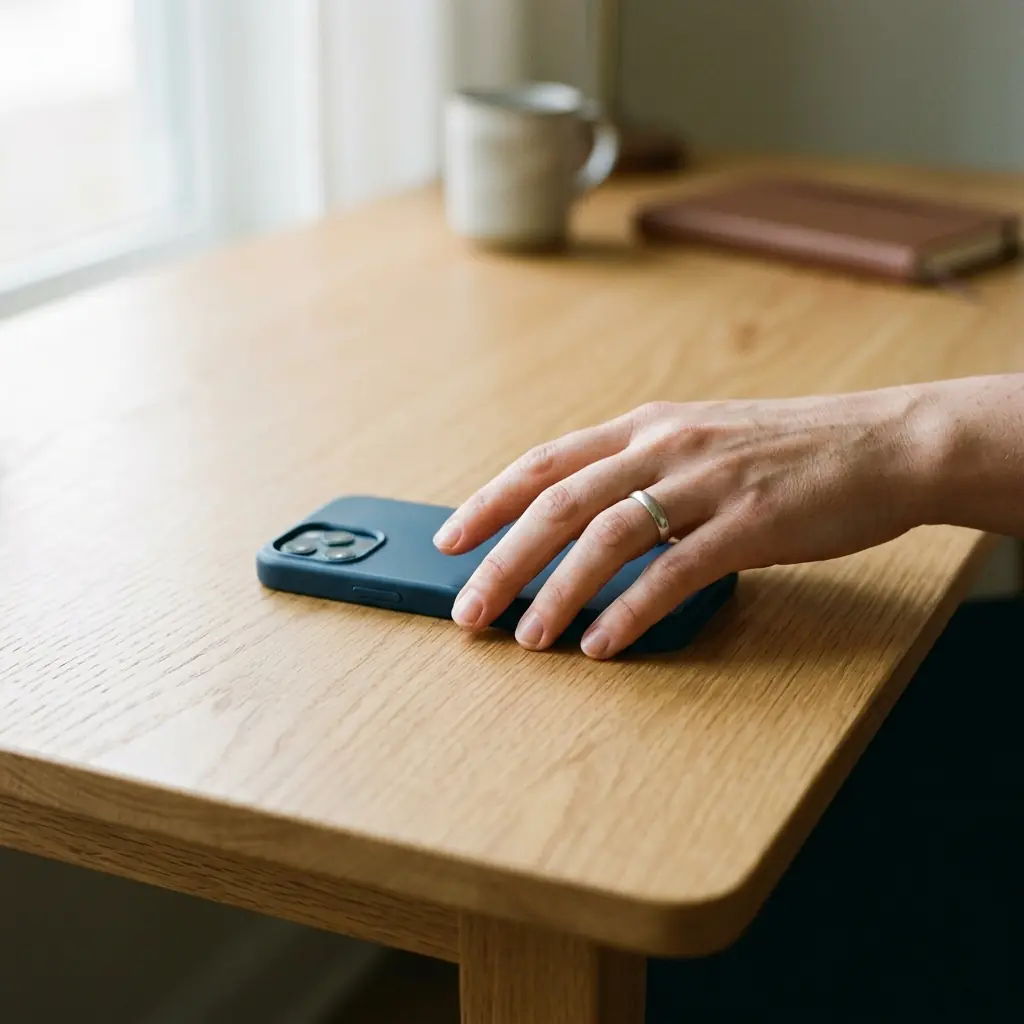
Walk to another room. Put your phone somewhere you can’t easily reach—a drawer in a different room, a locked cabinet, or give it to someone you trust. Turn off devices that give you private, unfiltered access.
If you’re on a computer, move to a public space in your home or go to a coffee shop. The simple act of being visible to others changes your behavior. Setting up device restrictions for the long term will help, but for today, just change the room.
The goal isn’t to make porn impossible to access—you can always find a way. The goal is to create a 30-second delay. That delay is enough for your rational brain to catch up with the impulsive urge.
Step 2: Name What You’re Actually Feeling
Porn is almost never about desire. It’s about escape from an uncomfortable feeling.
Ask yourself right now:
- Am I bored? (The most common trigger)
- Am I stressed about something?
- Am I lonely or isolated?
- Am I anxious about an upcoming event?
- Am I tired and looking for a quick dopamine hit?
- Am I avoiding a task I don’t want to do?
Write the answer down. Even on a scrap of paper. Just the act of naming the feeling reduces its power over you.
If you’re bored, you don’t need porn—you need stimulation. If you’re stressed, you don’t need porn—you need relief. If you’re lonely, you don’t need porn—you need connection. Porn is a counterfeit solution to a real need.
For a deeper understanding of your triggers, read our guide on porn addiction triggers.
Step 3: Use the 15-Minute Rule
When the urge hits, tell yourself: “I’ll wait 15 minutes. If I still want to after that, I can.”
Then do something else for 15 minutes. Anything. Walk around the block. Do pushups until you can’t. Call someone. Take a cold shower. Clean your room. Write in a journal.
Here’s the biological fact: urges are waves, not steady states. They rise, peak, and fall. Most urges peak within 15-20 minutes and then subside. You don’t need to eliminate the urge—you just need to outlast it.
This technique is called urge surfing, and it’s one of the most evidence-backed strategies for managing compulsive behaviors.
Build an Urge Emergency Kit
Write down 5 things you can do immediately when an urge hits. Keep this list where you can see it:
- Leave the room
- 20 pushups or jumping jacks
- Splash cold water on your face
- Text a friend
- Read a physical book for 10 minutes
Step 4: Remove the最容易 Triggers
For the next 24 hours, go on high alert for your personal trigger chain.
Common triggers to remove today:
- Social media: Delete or log out of apps that show suggestive content. Instagram, TikTok, and Twitter (X) are common gateways.
- Late night alone: Go to bed early. Keep devices out of the bedroom. Read a physical book instead.
- Boredom gaps: Plan every hour of your evening. A scheduled evening is much safer than an open one.
- Specific websites: Block them using Screen Time (iPhone) or Digital Wellbeing (Android). Even temporary blocking helps.
For detailed setup instructions, see our device restriction guide and environment setup guide.
Step 5: Replace, Don’t Just Remove
Porn was filling a need—even if it was filling it destructively. If you just remove it without putting something in its place, you’ll feel the void.
Replace the feeling, not just the behavior:
| Trigger | Replace With |
|---|---|
| Boredom | Go for a walk, learn something new, work on a project |
| Stress | Exercise, deep breathing, journaling, cold shower |
| Loneliness | Call a friend, go to a public place, join a community |
| Anxiety | Progressive muscle relaxation, meditation, talk to someone |
| Fatigue | Rest (real rest), nap, go to bed early |
| Avoidance | Do the thing you’re avoiding for 5 minutes |
Read healthy habits to replace porn for a comprehensive list of replacement activities.
Step 6: Create a Quick Win for Today
Your brain needs evidence that you can succeed. Get a small win within the first few hours.
Today’s quick win ideas:
- Delete one triggering app from your phone
- Set up a basic Screen Time passcode
- Tell one person you’re quitting (even a text message counts)
- Complete a task you’ve been procrastinating
- Go for a 20-minute walk outside
- Write down 3 reasons you’re quitting and put them on your wall
Each small win builds momentum. Don’t underestimate the power of a single day of success.
Step 7: Have a Relapse Backup Plan
This might sound counterintuitive, but planning for a slip reduces the damage if one happens.
If you slip today:
- Stop immediately. Do not “might as well” continue.
- No shame spiral. Shame leads to more use. It’s the enemy of recovery.
- Analyze: What triggered it? What time was it? Where were you?
- Adjust: Remove that trigger for the rest of the day.
- Restart: The next hour is a fresh start.
A slip is a stumble, not a fall. Our article on what to do after a porn relapse goes deeper into this.
What Science Says About the First Day
The World Health Organization recognizes compulsive sexual behavior disorder (CSBD) in the ICD-11 as an impulse control disorder (Kraus et al., 2018). This means that the urge to watch porn has a neurological basis—it’s not a moral failure or a lack of willpower.
When you stop, your brain, which has adapted to high levels of dopamine from porn use, enters a temporary deficit state. This causes withdrawal symptoms like cravings, irritability, anxiety, and fatigue. These symptoms are uncomfortable but temporary. They are also a sign that your brain is beginning to heal.
Research from the National Institutes of Health discusses how behavioral addictions in the ICD-11 are increasingly recognized as legitimate medical conditions requiring evidence-based treatment.
Understanding the science can help you reframe your experience: what you feel today is not weakness. It’s withdrawal. And withdrawal is temporary.
The First 24 Hours: Hour-by-Hour
Hour 1: Remove triggers. Change your environment. Tell someone. Hours 2-4: Stay busy. Do not allow unstructured alone time. Hours 4-8: Watch for the afternoon slump. This is a high-risk window. Exercise or go outside. Hours 8-12: Evening. Plan your evening hour by hour. Avoid devices in the bedroom. Hours 12-16: Wind down. Read, meditate, prepare for sleep. Hours 16-24: Sleep. A full night’s sleep reduces urge intensity the next day.
If you get through these 24 hours, you’ve proven something powerful to yourself: you can do this. Tomorrow, you do it again.
Building on Today
One day is enough to prove you can stop. But real recovery happens over weeks and months.
Today you built the foundation. Tomorrow, focus on:
- Understanding your withdrawal timeline
- Learning about the dopamine recovery process
- Setting up digital tools to support your recovery
- Exploring mindfulness practices for long-term stability
Start Your Recovery Today
You made the decision to stop. Now take the next step.
Start your private check-in to understand your unique triggers and get a personalized recovery plan. It takes one minute and stays completely private.